Recurring blocked drains in Bournemouth quickly become frustrating, especially when the drain clears for a few days and then backs up again. A one-off blockage may come from grease, wipes, leaves or a build-up of waste. However, when the same drain keeps slowing, smelling or overflowing, there is usually a deeper cause.
Many homes and businesses across Bournemouth, Winton, Boscombe, Kinson, Southbourne and Charminster have older drainage runs, shared pipework, tree-lined streets, surface water pressure or hidden pipe defects. As a result, simply clearing the blockage may not fix the reason it formed in the first place.
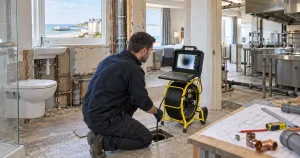
Drains24 helps customers deal with repeat drainage problems by clearing the immediate blockage and, where needed, checking the pipework properly. That may involve CCTV drain surveys, root cutting, drain repairs, descaling or targeted maintenance, depending on what the drain is doing.
Why recurring blocked drains Bournemouth properties suffer from need proper diagnosis
A one-off blockage may come from a simple obstruction. When the same drain blocks again, it deserves closer attention. Repeated blockages usually mean something inside the pipe slows the flow, catches waste or allows water to sit instead of draining away.
This often happens where drains have poor falls, moved joints, tree roots, scale build-up, old clay pipes, damaged pitch fibre, low sections or hidden faults. In some cases, the drain clears during jetting but begins to collect waste again because the pipe shape or condition has not changed.
That is why repeat blockages should not be treated as normal. A drain should carry wastewater away smoothly. If it keeps coming back, the problem needs more than another quick clear.
Common reasons blocked drains keep coming back
Several issues can cause a blocked drain to return after it has been cleared. Some are simple habits. Others need proper investigation.
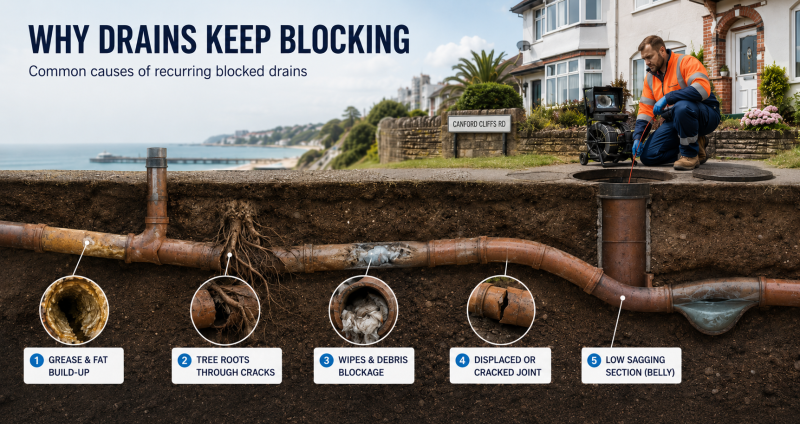
Grease and fat building up again
Kitchen waste is one of the most common causes of recurring blockages. Warm fat may go down the sink as liquid, but it cools inside the pipe and sticks to the drain walls. Over time, food waste, soap residue and small debris attach to it.
This can affect homes, cafés, restaurants, takeaways and holiday lets. Even if the drain gets cleared, the same issue can return if grease keeps entering the system or if old deposits remain inside the pipe.
For kitchen-related blockages, Bournemouth Drains24 can provide professional drain unblocking support and advise when further investigation may help.
Wipes, sanitary items and non-flushable waste
Toilets and drains often block because items go down them that should not be flushed. Wet wipes, even those marked as flushable, can collect in bends, joints and rough sections of pipe. Once they catch, more material can build behind them.
If a toilet or outside drain keeps blocking, the issue may not be the item alone. The drain may also have a defect that catches waste as it passes through.
Tree roots inside the drain
Tree roots are a major cause of recurring drainage issues. Roots look for moisture and can enter through cracked joints, damaged pipework or older clay drains. Once inside, they form a net-like obstruction that catches waste and slows flow.
Jetting may clear the immediate blockage. However, roots can grow back if the crack or open joint remains in place. In these cases, root removal and follow-up repairs may be needed to stop the problem returning.
Displaced joints or cracked pipework
A drain can look normal from above while the pipe underground has moved, cracked or dropped. Bournemouth homes with older drainage systems may be more likely to have clay pipes, older joints or sections affected by ground movement.
If a joint has opened, waste can catch on the lip of the pipe. If the pipe has cracked, soil and roots may enter. If the pipe has dropped, water may sit in a low section instead of flowing away cleanly.
A CCTV drain survey gives a much clearer view of these problems. A camera inspection allows the engineer to see what is happening inside the pipe rather than guessing from the surface.
Scale, silt and debris reducing the pipe bore
Some drains do not block because of one large object. Instead, the usable space inside the pipe slowly narrows. Scale, silt, sand, leaves, mortar, building debris or old deposits can reduce the bore until everyday wastewater struggles to pass.
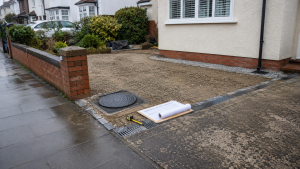
Building work, garden landscaping, patio work, heavy rain and long gaps between maintenance visits can all leave material inside the drain. The drain may still run, but it becomes much easier for small items to trigger a blockage.
Poor pipe fall or a belly in the drain
Drains need the right fall so water carries waste away. If a section has sagged or settled, water can sit in the pipe. Drainage engineers often call this a belly in the pipe. Waste then collects in the low point and the blockage returns again and again.
Jetting may move the waste for a while. However, if the pipe still holds water, the same section can block again. A CCTV survey can confirm whether the pipe has dropped, moved or lost its correct gradient.
Shared drains and responsibility issues
Some Bournemouth properties share drainage runs with neighbours, flats, HMOs, converted houses or terraced homes. A blockage may appear at one property even though the cause sits further along the shared line.
Shared drains can make repeat blockages harder to understand. One household may clear its own section, but the wider issue remains. Wessex Water provides guidance on sewer pipe responsibility, and private drainage contractors are often needed where the issue sits on private pipework.
If you are unsure whether the problem is private, shared or public, a proper inspection can help identify where the blockage sits and which section of the system is affected.
If the problem may involve shared or public drainage, it helps to understand where responsibility usually sits. Wessex Water explains sewer pipe responsibility, including the difference between private drains, lateral drains and public sewers. This can help Bournemouth homeowners decide whether the issue needs a private drainage engineer, the water company, or further investigation first.
Signs your blocked drain needs more than another clear
A drain that keeps blocking should not be ignored. The longer the cause remains hidden, the greater the risk of internal flooding, outside overflow, bad smells, pipe damage or repeated emergency callouts.
You should arrange a closer inspection if you notice any of the following:
- The same drain blocks more than once.
- Water clears slowly after jetting.
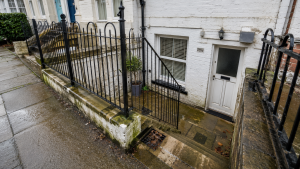
- The outside gully overflows during normal use.
- There is a sewage smell near a drain, toilet or inspection chamber.
- Several fixtures are slow at the same time.
- You hear gurgling after using sinks, baths or toilets.
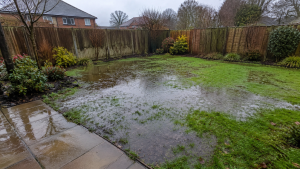
- Wastewater backs up after rain.
- You see damp ground, sunken areas or cracks near the drain run.
These signs suggest the problem may sit deeper in the system. Therefore, the next step should be investigation, not repeated guesswork.
What Bournemouth homeowners can safely check first
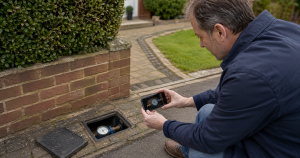
Before calling for help, there are a few simple checks you can make safely.
- Check whether one fixture is affected or several are slow.
- Look for overflowing outside gullies.
- Check whether the issue gets worse after rain.
- Ask neighbours if they have similar drainage problems.
- Stop using sinks, toilets or appliances if wastewater is backing up.
However, avoid lifting heavy covers if you are unsure, and never enter a chamber. Also avoid repeated use of harsh chemicals, especially if the drain is already blocked. They rarely fix structural causes and can create extra risks for anyone who later works on the system.
How Drains24 investigates recurring blocked drains
Drains24 starts by dealing with the immediate problem. If wastewater is backing up, the priority is to restore flow and make the area safe. Once the drain is running, the engineer can decide whether further checks are needed.
For recurring blocked drains, the next step may include:
- High-pressure water jetting to clear waste and deposits.
- CCTV survey work to inspect the pipe internally.
- Root cutting where roots have entered the drain.
- Drain descaling where scale has narrowed the pipe.
- Targeted drain repairs where the pipe has cracked, moved or collapsed.
- Advice on maintenance where grease, wipes or debris are causing repeat issues.
This approach helps avoid unnecessary work. More importantly, it gives the customer a clearer answer about why the blockage keeps returning.
When a CCTV drain survey is worth it
A CCTV survey is useful when the same drain blocks repeatedly, when there are signs of pipe damage, or when the blockage returns soon after clearing. It can also help before buying a property, carrying out building work or dealing with suspected root damage.
The camera can show cracks, displaced joints, scale, roots, poor falls, standing water, debris and collapsed sections. As a result, the repair plan becomes more accurate.
For many customers, this saves time. Instead of paying for repeated callouts, they get a clearer view of the actual fault.
How to reduce the risk of repeat blockages
Not every blockage can be prevented, especially when old or damaged pipework is involved. However, small habits can reduce the risk.
- Do not pour fat, oil or grease down the sink.
- Use sink strainers to catch food waste.
- Only flush toilet paper.
- Keep outside gullies clear of leaves and debris.
- Book maintenance if a commercial kitchen or holiday let has heavy use.
- Arrange a CCTV survey if blockages keep returning.
These steps are simple, but they help protect the pipework and reduce pressure on the system.
Recurring blocked drains in Bournemouth need the right fix
If a blocked drain keeps coming back, there is usually a reason. It may be grease, wipes, roots, scale, poor pipe fall, damaged joints or shared drainage. A quick clear may help for a short time, but it will not always solve the underlying cause.
Bournemouth Drains24 provides practical help for homes and businesses across Bournemouth and nearby areas. Whether the issue needs drain unblocking, a CCTV inspection, root removal or repair advice, the aim is to identify the cause and help stop the same problem returning.
If your drain has blocked more than once, it is worth getting it checked before it becomes an emergency.
FAQs
Why does my Bournemouth drain keep blocking after jetting?
If the drain blocks again after jetting, there may be a hidden fault inside the pipe. Common causes include roots, scale, cracked joints, poor pipe fall, a belly in the drain or waste catching on a rough section of pipe.
Do recurring blocked drains need a CCTV survey?
Recurring blocked drains often benefit from a CCTV survey because the camera can show what is happening inside the pipe. This helps confirm whether the problem is caused by roots, damage, scale, standing water or another obstruction.
Can tree roots make blocked drains come back?
Yes. Roots can enter through cracks or joints and catch waste as it passes through the pipe. Jetting may clear the blockage, but root removal and repair work may be needed if the roots keep returning.
Who is responsible for a recurring blocked drain?
Responsibility depends on where the blockage sits. Private pipework within the property boundary is usually the owner’s responsibility, while public sewers and some lateral drains may fall under the sewerage company. A drainage inspection can help locate the issue.
When should I call Drains24 for a repeated blockage?
You should call Drains24 if the same drain blocks more than once, wastewater backs up, bad smells return, an outside drain overflows, or several fixtures drain slowly at the same time. These signs suggest the issue may need proper investigation.